Seeding Biomaterials: Biobased Materials for West Michigan
Seeding Biomaterials explores how West Michigan's agricultural byproducts can become regenerative, biobased materials — supporting local innovation and replacing petrochemical plastic packaging.
Challenge
Petrochemical plastics pollute every marine and terrestrial ecosystem, emit greenhouse gases throughout their life cycles, and are now found in human blood. Alongside reduction, reuse and recycling, the world needs plastic-free alternatives.
In sectors such as packaging and textiles, fully biobased materials made from sustainably sourced biomass, including industry byproducts and waste, can offer that alternative and can be composted at end-of-life to improve soil health.
Approach
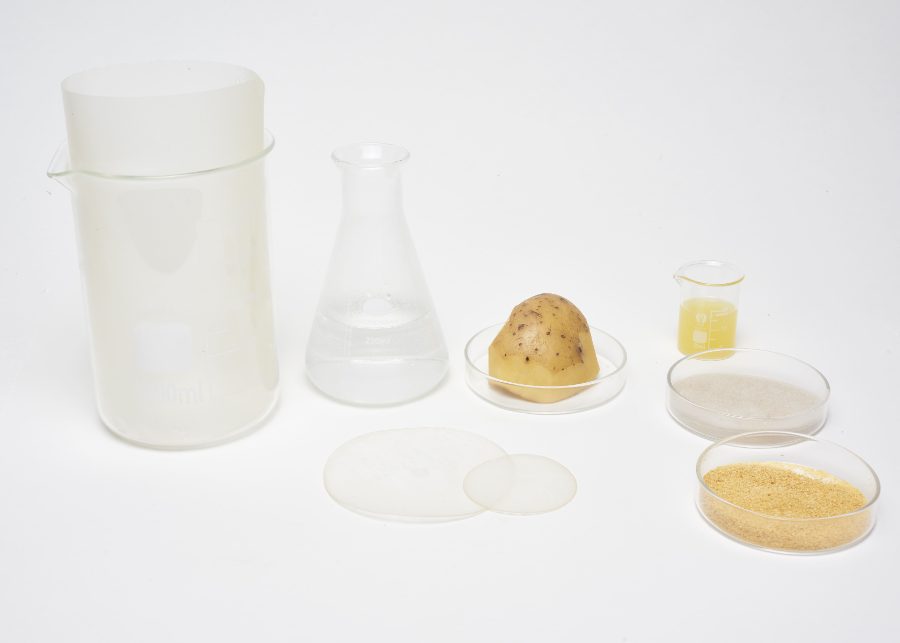
This project supports businesses in Grand Rapids to develop fully biobased, compostable plastics from local organic waste. It builds on a 2022 study, supported by the Wege Foundation, that explored which compostable biobased plastics could be made from regenerative agriculture byproducts.
Working with the Michigan Sustainable Business Forum (MiSBF) and local partners, the project:
Identifies usable organic waste streams in the West Michigan area from agricultural byproducts
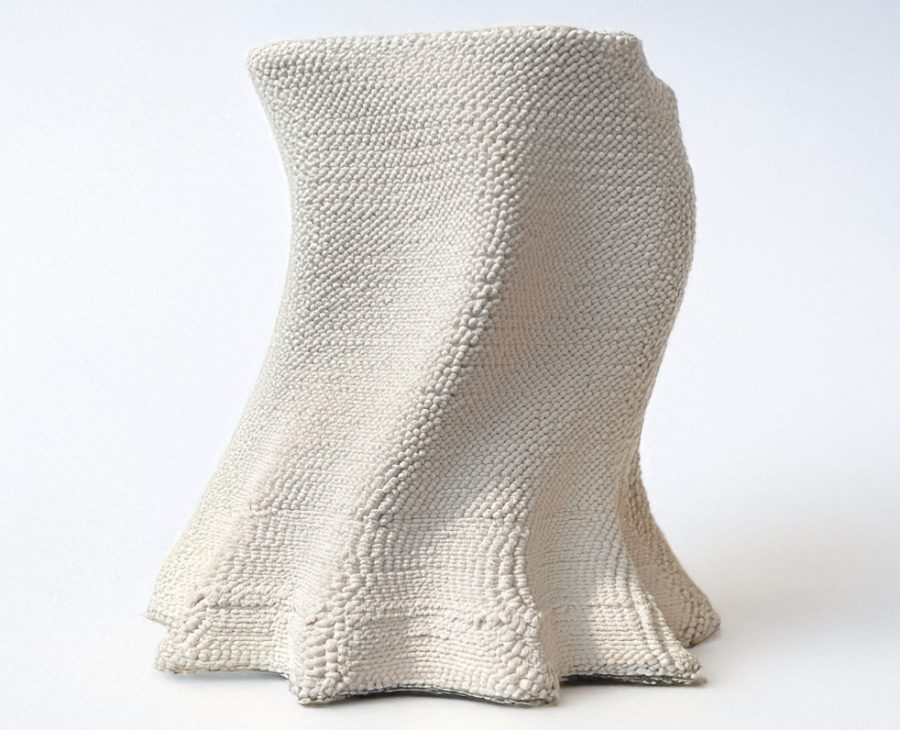
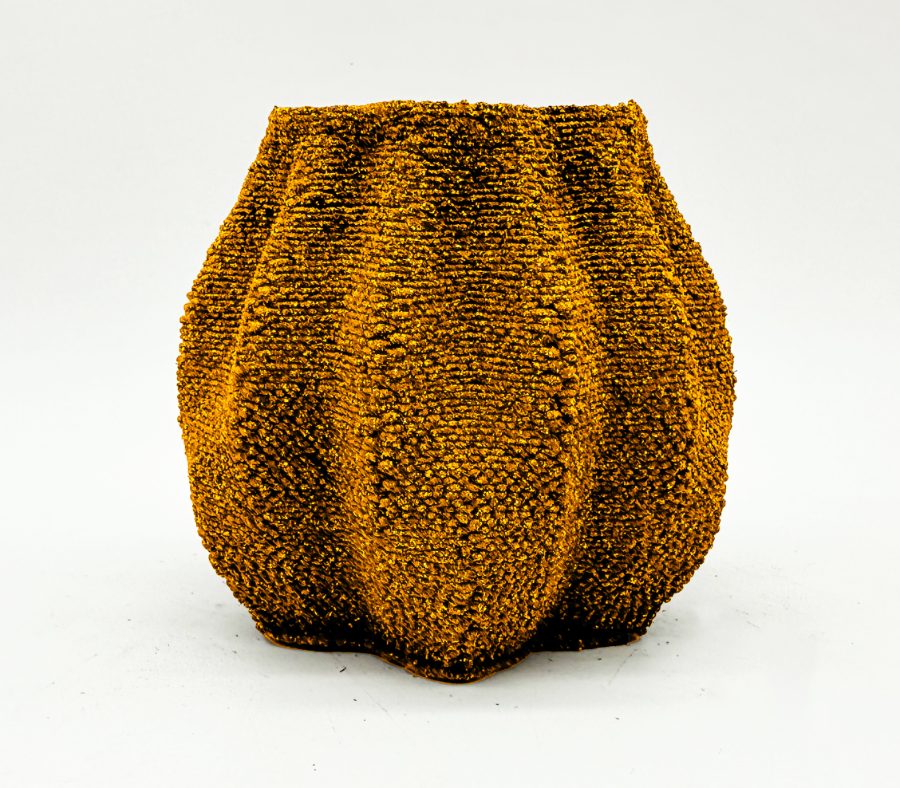
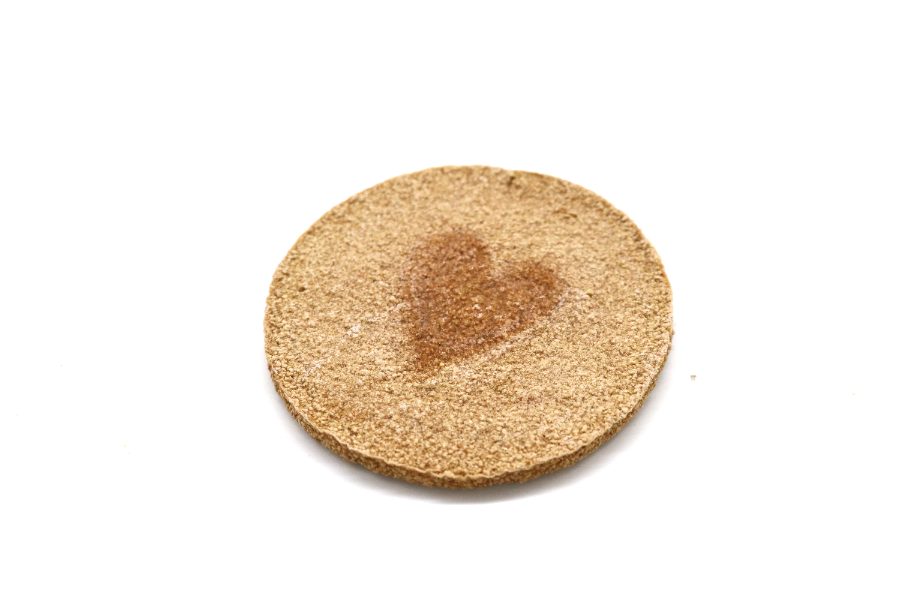
Prototypes and showcases biobased packaging materials from these feedstocks
Identifies value chains to support continued innovation of biobased materials
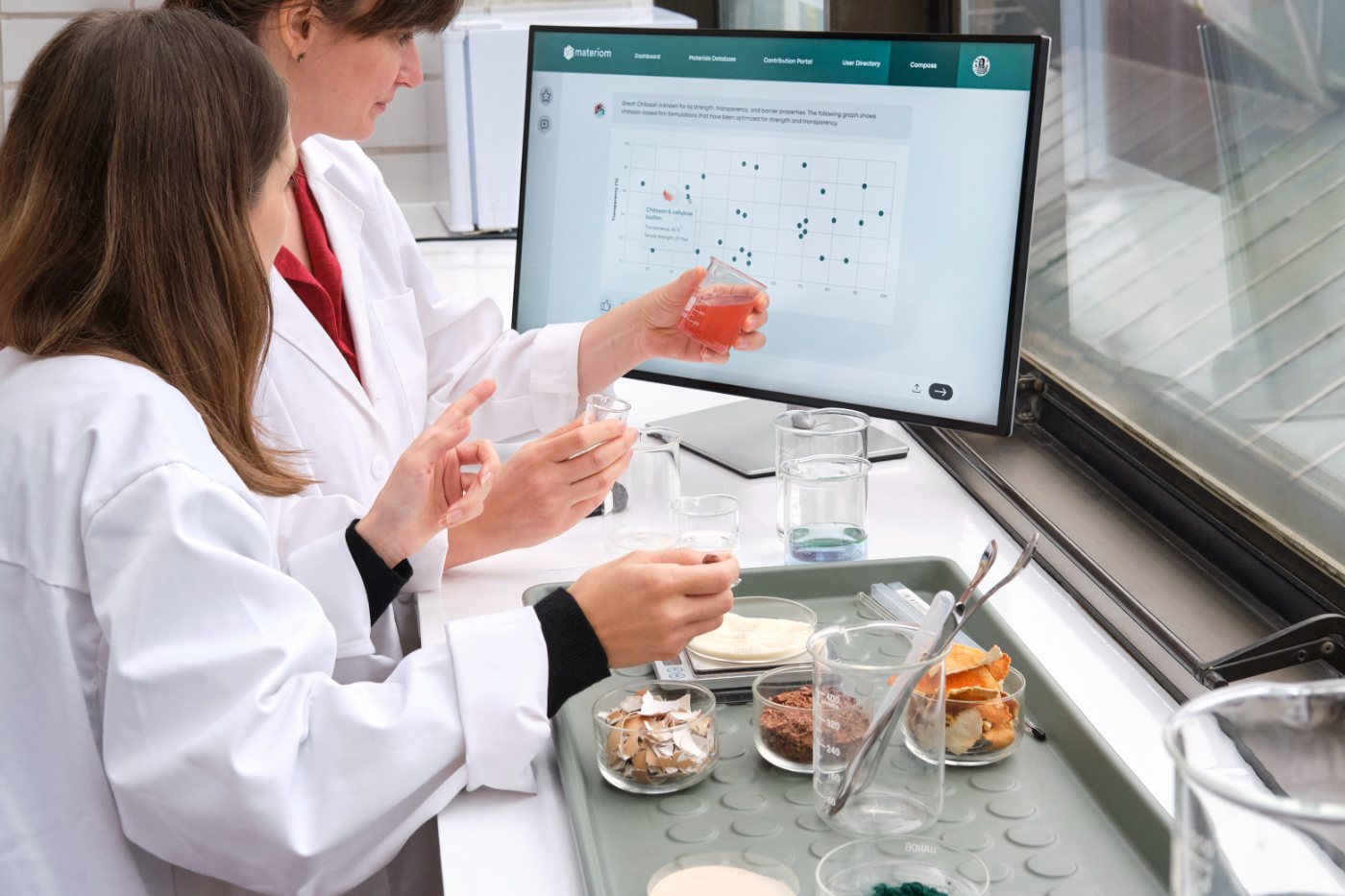
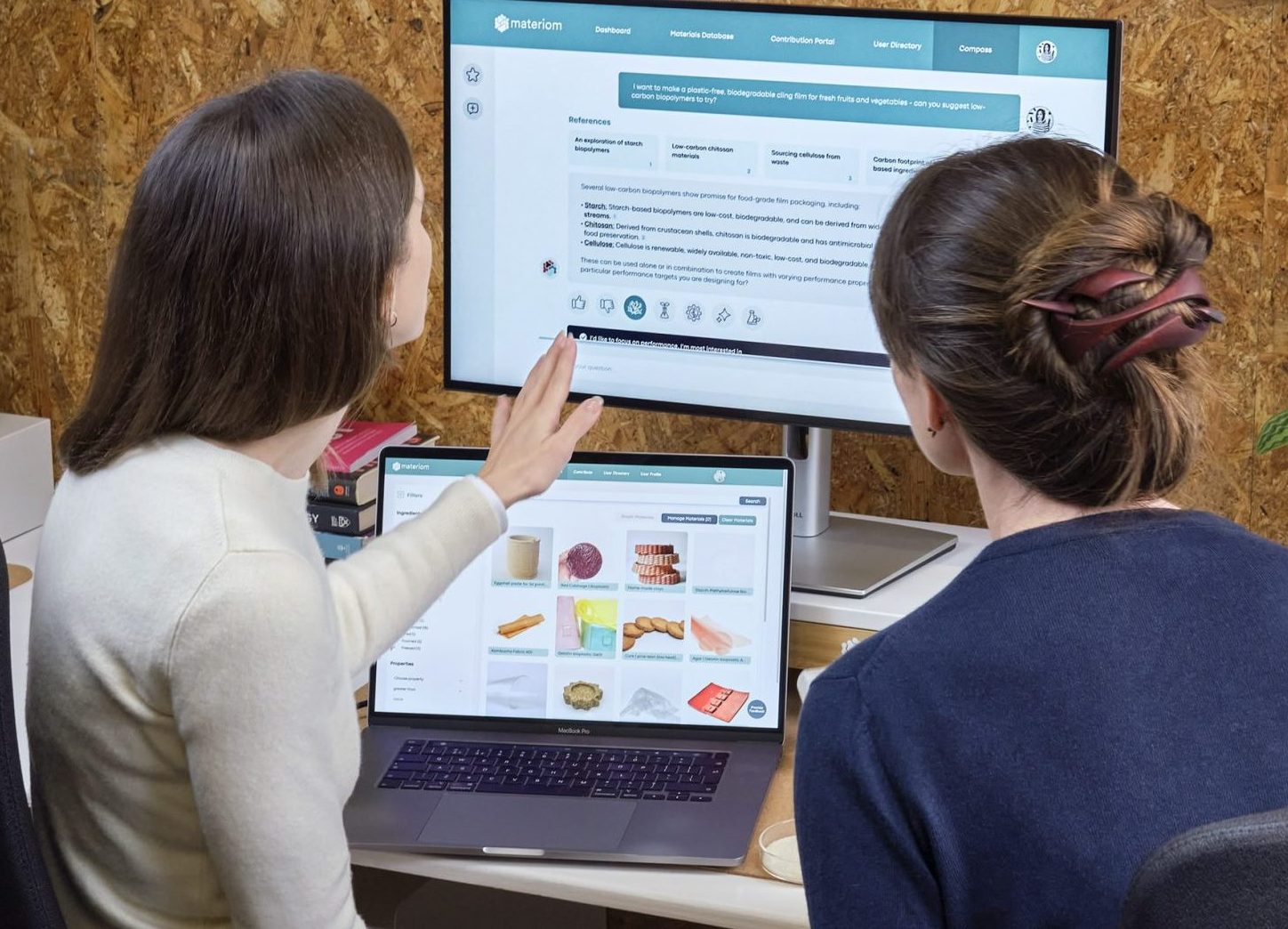
Two researchers working with biomass samples beside the Materiom Commons dashboard
Outcomes
The project's main output is an open toolkit that follows one continuous thread — from the region's biomass, to the biopolymers locked inside it, to the material properties they enable, and on to the recipes and resources that put them to work. The figures are interactive — hover, sort and filter to explore the data.
01 Biomass & Biopolymers
Every year, processing the region's crops and animals leaves behind enormous volumes of organic waste — and locked inside it are the biopolymers that next-generation materials are made from. This map dimensions what is going to waste, and what could be recovered.
Each bar is one year of production for a single feedstock, in US short tons. The darker portion is the crop or product that reaches its market; the coral portion is the processing residue left over — the fraction available as biomaterial feedstock.
Annual agricultural production, and what it leaves behind
Product to marketProcessing waste
Figure 1. Production per feedstock in US short tons; coral marks processing waste.
Each band's thickness is the indicative yield, in US short tons, reported for one biopolymer from one feedstock, routed to the molecular family it belongs to. Band widths show relative scale; they are not additive.
From biomass to biopolymer families
Figure 2. Band thickness is the indicative yield of one biopolymer from one feedstock.
Every bar is normalised to full width so the recipes can be compared directly; the bands inside it are the indicative yields reported for each biopolymer as a share of that waste stream. Only material-making molecules are mapped — the polymers, proteins, minerals and waxes that can be formed into a material — so the grey remainder is water, sugars burned as energy, and everything else outside that scope. Switch to absolute tonnage to compare volumes rather than recipes.
Waste per feedstock, split by biopolymer
Figure 3. Indicative biopolymer yields as a share of each waste stream.
Each tile is one biopolymer, sized by the summed indicative yields reported for it across all 30 feedstocks, in US short tons. Tile areas compare molecules against one another — they do not describe a quantity that could be recovered together.
Potentially available biopolymers in local biomass waste
Figure 4. Tile area is the summed indicative yield of each biopolymer.
For each waste feedstock, explore the primary biopolymers that can be extracted according to their estimated concentration.
Molecular composition & concentration by biomass waste
Figure 5. Primary extractable biopolymers per feedstock.
02 Applications & Properties
Once you know which biopolymers a feedstock yields, the next question is what they can do. Filter the dataset by biomass source or application to see the material properties, mappings, and real-world brand examples for each biopolymer.
Explore the applications that each natural ingredient can be used for, together with the properties that each ingredient can play a role in.
Relevant biopolymer properties for material applications
Biomass source
Application
⌕
19 of 19Click a molecule for details
Figure 6. Biopolymer roles across material applications.
03 Starting Material Recipes
From properties to practice: open recipes for making the materials, and the resources to help innovators and producers put them to work.
Developed for the project, these material formulations leverage the regional availability of local agricultural waste, mainly focusing on derivatives from apple mash, spent grain/yeast, dairy products, and poultry byproducts.
Consequently, this drives the primary utilisation of biopolymers like cellulose, methylcellulose, carboxymethylcellulose, gelatin, whey, and casein. This supply was strategically aligned with the requirements of local stakeholders, who sought the development of composite and film formats tailored for foodware, food packaging, and furniture packaging.
Biobased materials developed for the Seeding Biomaterials project
Hotplate with magnetic stirrer, beaker, pH meter, casting tray / silicone molds, dehydrator
Packaging properties
Semi-transparent to translucent with low surface gloss; high tensile flexibility with moderate tear resistance; excellent oxygen barrier, moisture sensitive. Best for dry food wraps, inner confectionery liners, heat-sealable bio-pouches.
Ingredients
Pectin — 20.0 gFiltered water — 400 mLGlycerol (plasticizer) — 3.2 gPotassium sorbate (antifungal) — 0.5 g
Processing
1 · Heating & hydration. Heat 400 mL water to 70–80°C. Slowly add 20.0 g Pectin under continuous stirring (1000 rpm) to avoid clumping until fully dissolved (15–20 min).2 · Plasticizer incorporation. Add 3.2 g Glycerol directly to the clear pectin solution and stir for 10–15 min at temperature.3 · Antifungal addition. Add 0.5 g Potassium Sorbate to the warm solution (70–80°C) and stir for 5 min. Verify pH is below 6.0.4 · Degassing & casting. Allow solution to rest at 40°C to release air bubbles. Cast into Teflon or silicone molds.
Drying
Dehydrator at 35°C for 8 h, followed by ambient drying at 25°C.
Hotplate, magnetic stirrer, refrigerator (4°C), level casting mold
Packaging properties
High optical transparency, glossy finish; high tensile modulus, durable playing-card flexibility. Superior barrier against oxygen, oils, and non-polar solvents. Best for clear display windows in cartons, sachets, oil-resistant wraps.
Ingredients
Methylcellulose (MC) — 8.0 gCarboxymethylcellulose (CMC) — 8.0 gDistilled water — 400 mL (150 mL hot at 80°C / 250 mL ice-cold)Glycerol (plasticizer) — 6.0 gPotassium sorbate (antifungal) — 1.0 g
Processing
1 · Hot MC dispersion. Heat 150 mL water to 80°C and dissolve 1.0 g Potassium Sorbate. Scatter 8.0 g MC powder under stirring (600 rpm).2 · Cold hydration. Dissolve 8.0 g CMC and 6.0 g Glycerol into 250 mL ice-cold water.3 · Matrix blending & cold rest. Combine both solutions, reduce speed to 300 rpm, and refrigerate at 4°C for 2–4 h until a clear gel forms.4 · Casting. Pour the room-temperature gel into molds to a wet depth of 5–6 mm.
Drying
Oven-dry at 50–60°C for 24 h to thermally lock the MC gel structure.
Beaker, hotplate, overhead dough mixer, rolling pin, curing oven
Packaging properties
Dense matte white, smooth finish, leatherboard feel; exceptional puncture strength, high fold endurance, flexible structural card profile. Moderate grease resistance. Best for rigid bio-cardboard cartons, bookbinding covers, heavy protective sleeves.
Ingredients
Gelatin (Pork 240 Bloom or Beef 220 Bloom) — 40.0 gJelucel HM 200 pure cellulose (filler) — 40.0 gFiltered water — 400 mLGlycerol (plasticizer) — 16.0 gPotassium sorbate (antifungal) — 0.5 g
Processing
1 · Blooming & cook. Bloom 40.0 g Gelatin and 0.5 g Potassium Sorbate in 400 mL water for 30 min. Heat to 60°C to fully dissolve.2 · Plasticization. Add 16.0 g Glycerol and stir for 3 min.3 · Cellulose kneading. Turn off heat. Add 40.0 g Jelucel HM 200 powder and knead with an overhead mixer for 4 min until a paste forms.4 · Mold compacting. Pack into molds, cover with parchment paper, and roll flat to 5–6 mm wet thickness.
Drying
Oven-dry at 45–50°C for 36 h under a flat weight during final 8 h.
RECIPE 4WheyWhey Protein Isolate FilmSingle Layer Protein Film40 minutes
Tools needed
Cold water beaker, magnetic hotplate, temperature probe, casting molds
Packaging properties
Semi-transparent to clear, smooth surface; good tensile strength, moderate flexibility, heat-sealable potential. Superior oxygen barrier, low lipid permeability. Best for single-serve food sachets, edible coatings, dry food pouches.
Ingredients
Whey protein isolate (WPI >90%) — 40.0 gDistilled water — 400 mLGlycerol (plasticizer) — 12.0 gPotassium sorbate (antifungal) — 0.5 g
Processing
1 · Cold solubilization. Dissolve 0.5 g Potassium Sorbate in 400 mL cold water. Create a deep vortex (400 rpm) and slowly sprinkle 40.0 g WPI. Stir cold for 15 min to dissolve without threads.2 · Thermal denaturation. Heat to 75–80°C and maintain for 20 min while stirring to uncoil proteins.3 · Plasticization. Stir in 12.0 g Glycerol and mix for 5 min.4 · Degassing. Rest at 45°C for 15 min.
Drying
Cast deep into molds (5–6 mm) and oven-dry at 35–40°C for 24 h.
Beaker, magnetic stirrer hotplate, temperature probe, silicone casting molds, drying oven/dehydrator
Packaging properties
High optical clarity with a slight amber sheen, improved tensile toughness and puncture resistance compared to pure gelatin; superior oxygen barrier, low lipid permeability, heat-sealable potential. Best for clear edible wrappers, primary dry food sachets, and clear box window films.
Ingredients
Whey protein isolate (WPI >90%) — 20.0 gGelatin (Pork 240 Bloom or Beef 220 Bloom) — 20.0 gDistilled water — 400 mLGlycerol (plasticizer) — 12.0 gPotassium sorbate (antifungal) — 0.5 g
Processing
1 · Cold hydration & blooming. Dissolve 0.5 g Potassium Sorbate and 20.0 g WPI into 400 mL cold water under active stirring (400 rpm) until completely dissolved. Evenly sprinkle 20.0 g Gelatin over the liquid surface and leave undisturbed for 30 min to bloom.2 · Thermal dissolution. Place beaker on hotplate and heat to 60–65°C while stirring continuously at 400 rpm for 15–20 min until the gelatin granules dissolve completely.3 · Plasticization & denaturation. Gently raise heat to 75°C for 10 min to unfold WPI chains. Stir in 12.0 g Glycerol and mix for 5 min until homogeneous.4 · Degassing. Rest the hot liquid quietly at 45°C for 15 min to allow trapped micro-bubbles to dissipate.
Drying
Cast into molds to a wet depth of 5–6 mm. Oven-dry at 35°C for 24 h or ambient dry at room temperature (23°C) until non-tacky.
Beaker, magnetic stirrer, casting tray, dehydrator
Packaging properties
High transparency, soft tactile flexibility, excellent film uniformity; highly elastic, easy peeling. Superior oxygen barrier, highly water-soluble. Best for water-soluble packaging sachets, detergent pods, edible food wraps.
Ingredients
Carboxymethylcellulose (CMC) — 4.0 gFiltered water — 400 mLGlycerol (plasticizer) — 4.0 gPotassium sorbate (antifungal) — 0.5 g
Processing
1 · Hydration. Dissolve 0.5 g Potassium Sorbate in 400 mL water. Sprinkle 4.0 g CMC powder under active stirring (500 rpm) for 20 min.2 · Plasticization. Stir in 4.0 g Glycerol and blend for 5 min.3 · Degassing. Rest for 15 min to allow air bubbles to dissipate.
Drying
Pour into molds. Dry in a dehydrator at 35°C for 8 h or air dry.
Figure 7. Six starting recipes, with tools, properties and processing steps.
Nine open-access formulations from the Materiom Commons that build on the same biopolymer families found in the region's waste streams. Each links back to the full recipe, with process steps, properties, and contributor notes.
Figure 8. Related formulations in the Materiom Commons library.
Further Reading
Courses, masterclasses, reports, and databases for moving into bio-based material development.
Course: CiD Innovation Alliance, Flipped Classroom: Biobased Innovation, a session by IAAC and Materiom covering feedstock sourcing, material development, fabrication and the Urban Cascade case study. Video · Booklet · More CiD resources